
A post-capitalist society is emerging
It's coming from the places that birthed Colonialism and Empire

Capitalism might just be nearing its end. A new economy is being built. It’s happening in real time. Sounds bonkers, given the overwhelming control billionaires have over our lives.
The rapid rise of New York City mayor Zohran Mamdani made the headlines last week, but something just as radical is quietly bubbling away in Europe.
Crazily, it’s coming from the very places that birthed Colonialism and Empire — extractive systems that continue to underpin modern capitalism.
New data has, for the first time, mapped organisations actively working to build a new economic system is rising across Europe. Half of them have been founded in the last decade alone.
Take a look at this map, below. It shows where exactly ‘new economy’ organisations are sprouting up.
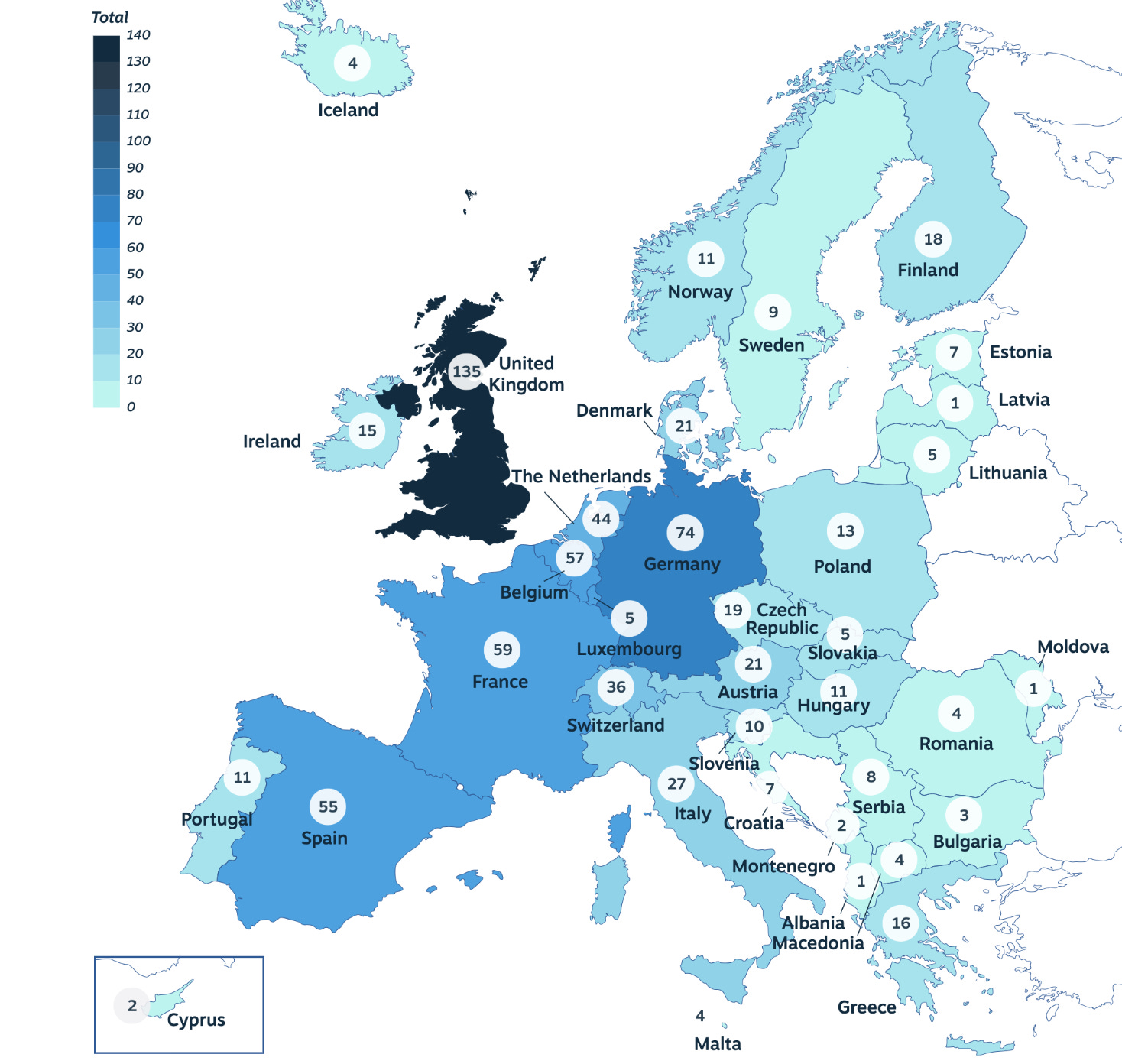
There is a clear West-East divide in where those organisations are coming from.
The UK, Germany, France, Spain and Belgium have the highest number of organisations dedicated to building a new economy, spawning new ideas such as housing collectives and community energy projects.
That number begins to plummet the further east you go. One reason why that might be is the role of collective memory and cultural resistance across Central and Eastern Europe. Capitalism remains generationally nascent. Small NGOs carry the burden of bringing about paradigm-shifting ideas.
I posted the map on LinkedIn which has—to put it mildly—blown up. It’s an indication that so many of us are looking for radical hope.
It hasn’t been without pushback. One person noted how larger populations in Western Europe influence the map. Another noted that in the Nordic countries, universal ideas of care are already baked into the system, such as long parental leave and state support for childcare. There is truth in that. A ‘new’ economy will not be entirely new. Nor will it come from one place alone.
The most radical ‘new economy’ ideas will come from places where rebuilding is happening because the system is fast crumbling into a heap. In the UK, material standards of living have dramatically fallen after 40 years of neoliberal policies gutting the state and favouring all-out privatisation. Today, the UK is home to Europe’s wealthiest and poorest regions.
There might be another reason why the ‘new economy’ map looks like it does. My own theory is a pluralistic society.
When people from very different backgrounds eat, live, and mix together in close proximity over multiple generations, collective and individual memories mix. New ideas rise up. New visions are formed, fast. Rigid conformity dissolves. This might also be why a ‘new economy’ is bubbling away, particularly in the countries highlighted in the darkest shades of blue on the ‘new economy’ map.
Minorities in particular have long known that the economic system is broken - from the indigenous Sami people, under threat from the extraction of their ancestral lands because of the European Union’s desire to be ‘self-sufficient’, to British Bangladeshis like my own family working low-pay, dangerously frontline gig economy jobs during the Covid pandemic.


It feels wildly fanciful to say out loud what many of us feel in our bodies: a new economic system is needed. It’s coming around the bend.
It will be a system that no longer aspires to measure ‘growth’ as success, at the expense of the earth and our sense of community. Momentum is building.
Next Thursday (20 November), I’ll be hosting an online conversation on this very topic. I’ll be joined by Jo Swinson, Britain’s youngest ever leader of a mainstream political party. She now works with Partners For A New Economy, an international philanthropic fund dedicated to bringing about a whole new economy.
Do join, if you can (details here).
Hope is on the horizon. It’s growing from the ground up.
Best of all, it’s being led by the children of Empire, from the eye of the storm, from the belly of the beast.
The link goes to an error page, please can you correct it
harold@haroldgoodwin.info