
Beyond borderlands
Why expanded imagination is essential for our sense of belonging

Hello and happy new year,
I hope you’ve been cocooning, resting and recharging. I have just returned from Andalusia, Spain. I’ll be sharing a series of posts about this magical place and it’s wider significance over the next few weeks. Andalusia is one of those places where the mind, body and soul comes alive.
For now, I wanted to say a quick thank you.
This newsletter was born twice; at first, just a Substack about my time living in Estonia and reporting from northeast Europe in 2023, before it’s re-birth upon returning home to London. It was only then, after some 33 years, that I realised my version of everyday mundanity was, in fact, incredibly powerful and is still considered strange. Coming from a multicultural, pluralistic and sometimes contradictory place expands the imagination for both self and society. That feeling doesn’t just reside in family memories or nostalgia for the past. It appears everywhere.
I firmly believe that we all hold the possibility of tapping into a sense of having multiple belongings, regardless of where we are from. I keep returning to one of my favourite quotes from British-Turkish author Elif Shafak, in her book How To Stay Sane In An Age Of Division;
“Multiple belongings are nurtured by cultural encounters but they are not only the preserve of people who travel. It is an attitude, a way of thinking, rather than the number of stamps on your passport. It is about thinking of yourself, and your fellow human being, in more fluid terms than solid categories.”
This small but deeply effective lens has the capacity to expand our imagination. We must realise that we carry a responsibility to embody the future that we want to see. It is essential in the current political climate.
As I wrote back in September for the imperious investigative journalist Sam Bright (who is exposing Britain’s Far Right political party with some outstanding reporting), shining a light on the dark, gnarly sides of cultural memory is essential work. Coming together as coalitions, through exchange and sharing, can halt the colonial and ethno-nationalist tide.
Over the past year, I have been lucky to witness Shafak’s definition of belonging and borders both at home and abroad.
In San Francisco, I came across more Jewish Americans openly supporting Palestine than I had ever read about in newspaper articles. I had to look twice when seeing a man wear a watermelon Jewish kippah (skullcap); a quiet, everyday example of a new generation of Jewish people interrogating ideas of ‘loyalty’, changing their sense of self through coalition and solidarity.
In Malaysia, I felt a sense of kinship and belonging. It unearthed a wider sense of self connected to the Global South, long dormant inside me.
Travelling through the Dutch landscape in late 2025 suddenly took me back to the flat lands of Bangladesh.
Borders and belonging fascinate me because they permeate every part of us, from collective memory to the individual choices we make.
In the summer of 2025, an invisible border was shattered. Perhaps it was a decolonial act that healed divides in my own body. I brought back my middle name (Mohammed) onto my passport sixteen years after I first scrubbed it off at the first opportunity when I turned 18. An act of self harm done to protect my future self, still living with the remnants of the post 9-11 era. I’ve had to navigate the way borders and nation states wield power, scrub, marginalise and dictate in sometimes subtle ways. In bringing back my middle name, I said goodbye to the invisible borders that reside in me.
At the end of the year, I also said goodbye to a place that I have regularly been visiting for a number of years; a home away from home, a place of regular respite on the borderlands between France and Switzerland. It is a bizarre place; one can be standing on a patch of grass in France, but looking across the road, or over the horizon, into Switzerland.
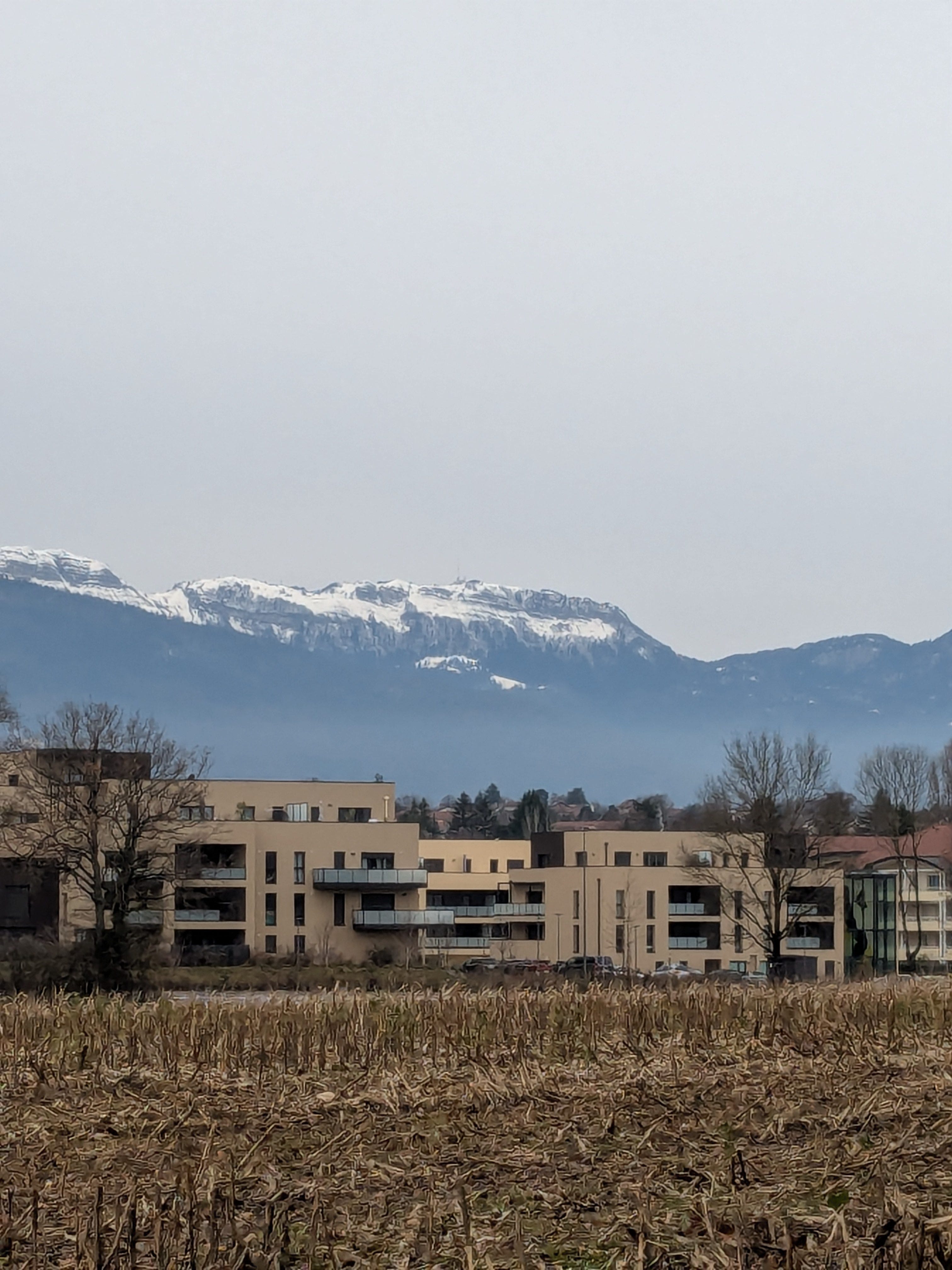
Though physical borders have long gone, you can still see where fault lines drop; in the long line of cars driving in from Switzerland for cheaper groceries on the French side, to the bizarre way French, Italian and German languages remain contained in their respective parts of Switzerland without ever bleeding into one another. Small, tidy linguistic containers that only the Swiss will ever understand.
Countries like to tell themselves neat little histories. The truth is messier.
Did you know that in 10th century, there was a short lived Islamic presence high up in the Swiss Alps? Me neither. There is relatively little in-depth scholarship on the topic, with some historians in the 20th century painting them as mere “pirates”. That slanted history is now being revisited.
There are almost no remaining vestiges of that time. Except in the most unlikely of places. In small villages, street names carry the memory of that brief period in the 700s, when southern France was part of the wider Islamic world for a century. You’ll find it in the French village of ‘Ramatuelle’ (in Arabic, Rahmahtullah translates to God’s blessings), or ‘Rue Des Sarrasins’ (Road of Saracens). There is even a village gate resembles the gate of Damascus.
It just goes to show how cultural interactions bleed into one another. Some fragments of memory stay alive, reminding us of a time when borders and belonging were fluid. Some memories die out. Others quietly embed themselves.
I stare at the mountains and wonder, what else is hidden? What else can be found?
Let 2026 be the year our imaginations—and sense of belonging—expand.
Thank you, Shafi, for an insightful read. Also, congrats on taking your name back ❤️